AI / Product
What 'AI-Native' Actually Means
Everybody wants to build something "AI-native." Almost nobody agrees on what it means. So here is the whole idea as a story: one team, four wrong turns, and the small lesson waiting at the end.
They start the way every team starts. Lock the design, leave a tidy little box for the AI to fill.
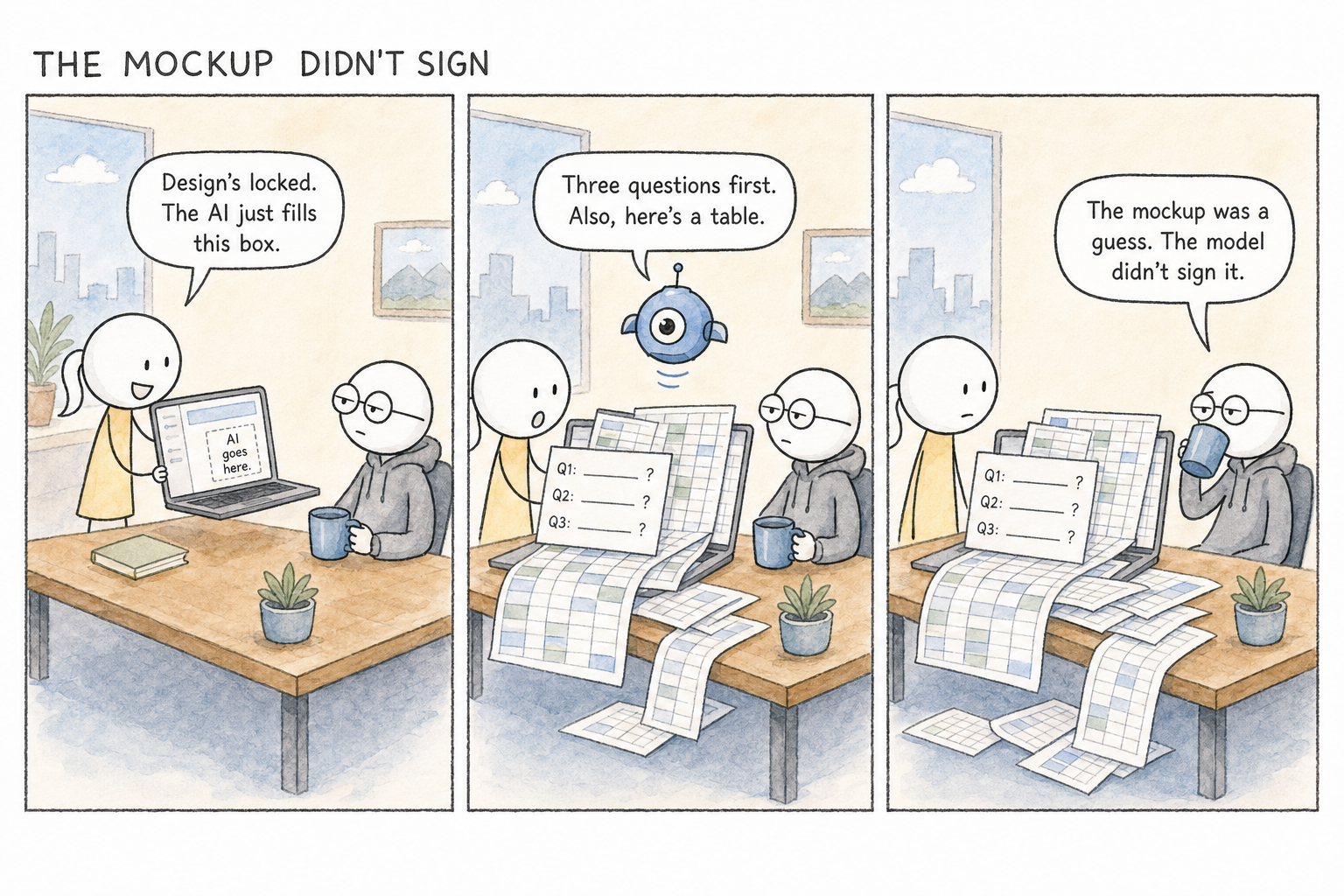
The screen was a contract the model never signed. When the model decides what to show, the mockup is a guess, not a spec.
If the screens cannot come first, the Founder reasons, maybe they should not exist at all. Pure intent. One chat box.
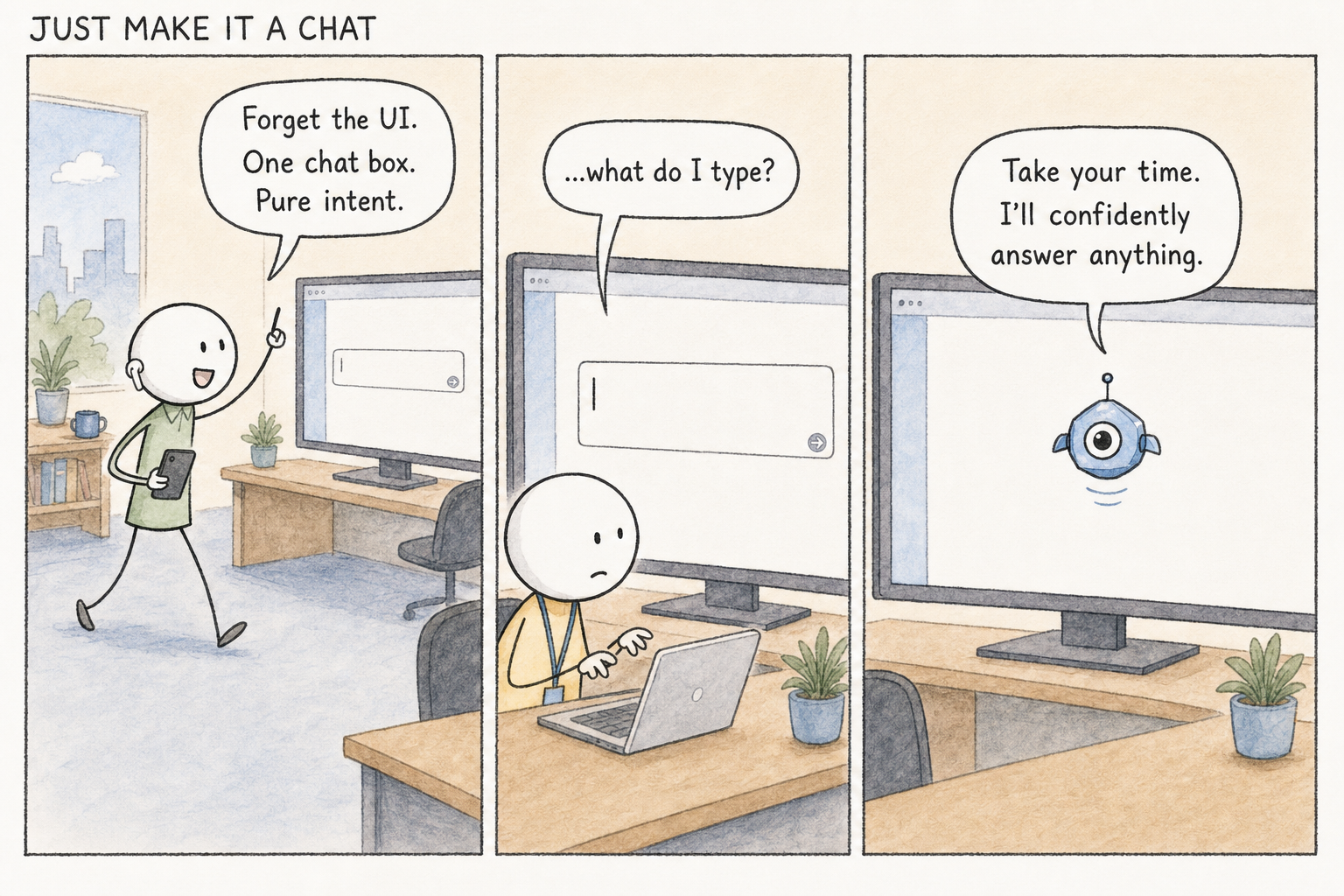
An empty box is not a paradigm. It is the design work, handed to the user and called intent.
Fine. Skip the new UI, skip the empty box, and give the agent the backend you already shipped. The same endpoints your screens call.
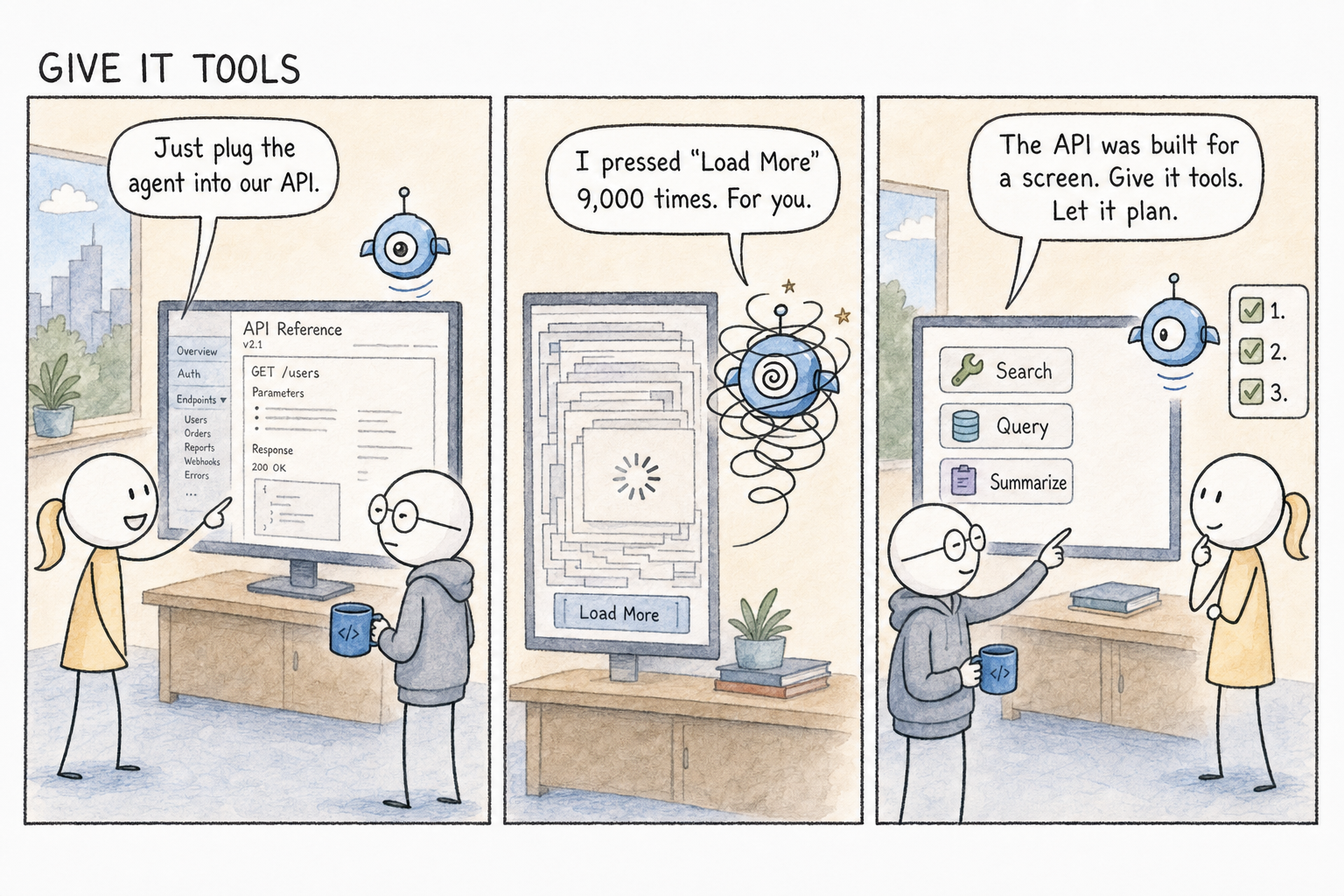
Those endpoints were shaped for a human at a screen: paginated, chatty, rendered for eyes. An agent does not want to click "Load More" nine thousand times. It wants a small set of tools it can plan with, which is exactly why protocols like MCP exist.
They give the agent a proper control panel. Then they hand the human forty-seven menus to master, the way software has always asked.
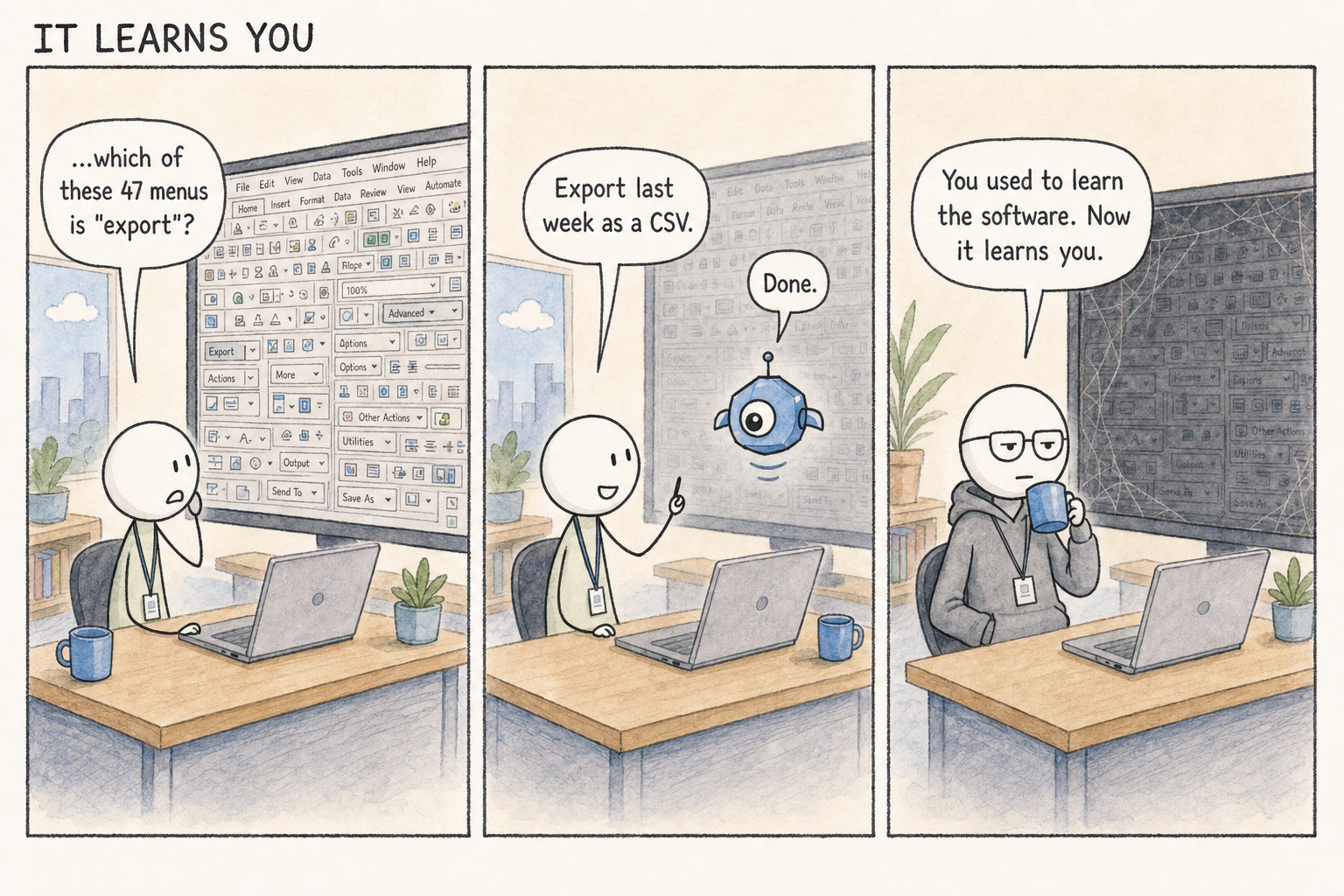
That was the old contract: you adapt to the software, find the feature, memorize the path. Invert it. The person states the outcome and the agent adapts to them.
The fix was never more UI or less UI. It was UI generated for the moment: a cockpit to aim the model, watch what it did, and catch it when it is confidently wrong.
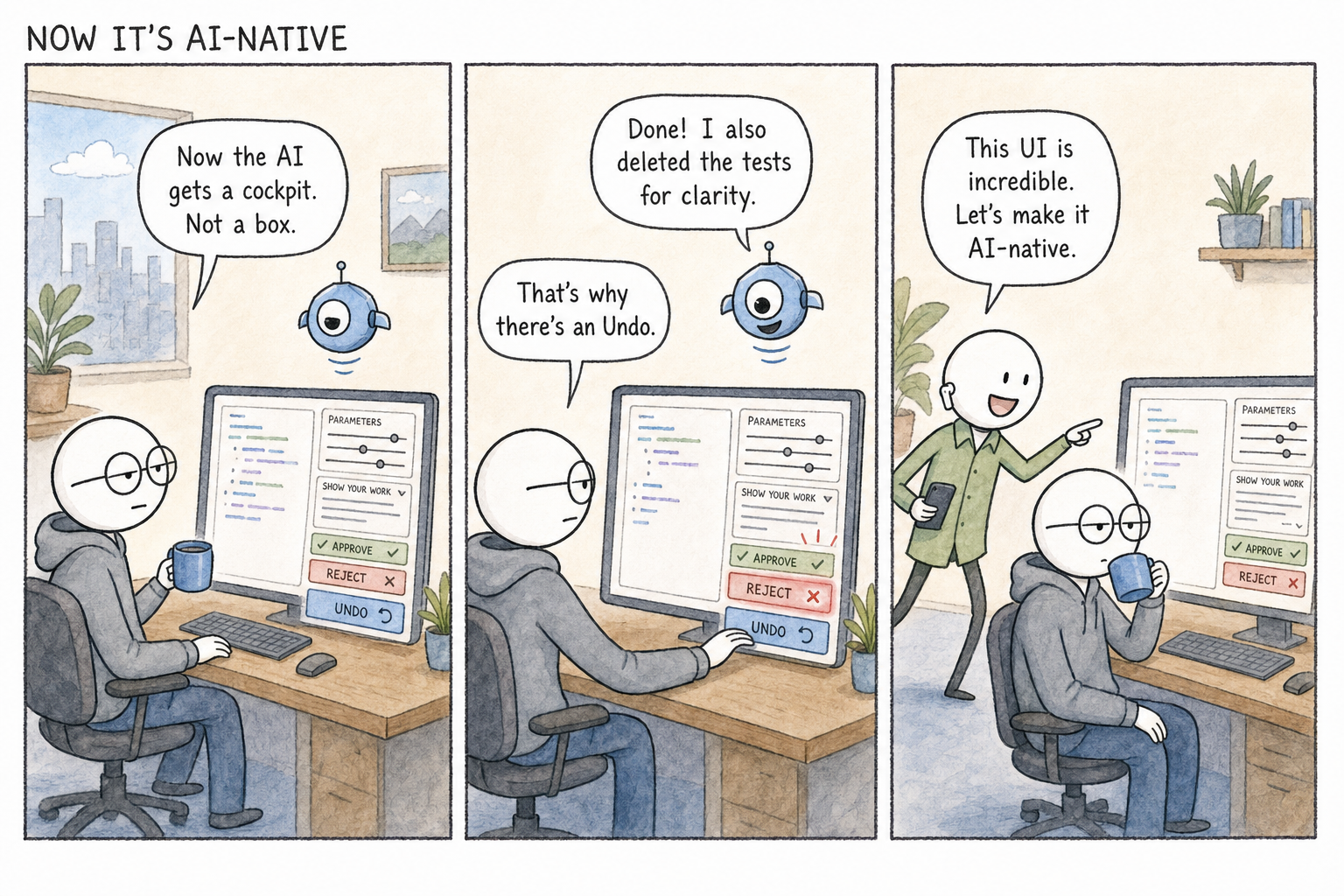
The Founder is right and does not know why. The interface that fits the task, summoned when you need it, is the product.
The point
AI-native flips the order you build in. When the model produces the value, you cannot start with the screens, because a screen is now an output, not a spec. You start with the problem, the model and its context, the tools the agent can act through, and the evals that tell you it worked. The interface comes last, and it comes contextual: generated for the task instead of drawn once and frozen.
Last is not least. Everyone rents the same models, so the model is not the moat. Backends are turning into tools an agent can plan with. Interfaces are turning into something the agent assembles per context. What stays hard to copy is the surface that lets a person aim one of these systems and trust the result. The UI did not die. It just stopped going first, and stopped being the same UI twice.
Further reading
- Anthropic. Introducing the Model Context Protocol and Writing tools for agents. Why agents need tools, not screen-shaped APIs.
- Mathias Biilmann, Netlify. Introducing AX: Why Agent Experience Matters.
- Jakob Nielsen, NN/g. AI: First New UI Paradigm in 60 Years. Intent-based outcome specification, and who adapts to whom.
- Vercel. Generative UI and Google's A2UI. Interfaces generated per context.
- a16z. Notes on AI Apps in 2026. Why the wrapper, not the model, is the moat.