prior-authorization.md · Agent workflows
Prior authorization evidence readiness
A synthetic workbench helps an authorization coordinator request missing records, reassess a packet and preserve evidence for human review.
- TypeScript
- Next.js
- Tailwind CSS
- Fastify
- PostgreSQL
- Drizzle
- pg-boss
- LangGraph
- Claude
- Docker Compose
An authorization coordinator needs more than a list of missing documents. They must request the right existing record, match the reply to a case, check for conflicts and hand a reviewer a traceable packet.
This workbench demonstrates that loop with original synthetic documents for a fictional California durable medical equipment supplier preparing an initial Medicare fee-for-service K0823 power-wheelchair request. Its outcome is administrative readiness for review. Clinical sufficiency, payer authorization and payment remain outside its authority.
From missing record to reviewed packet
The operator opens a case missing a finalized order, inspects its source-linked findings and approves a neutral request for the existing document. Delivery is simulated locally. An archived synthetic reply creates a new case revision and triggers reassessment; a reviewer can then accept that exact administrative packet.
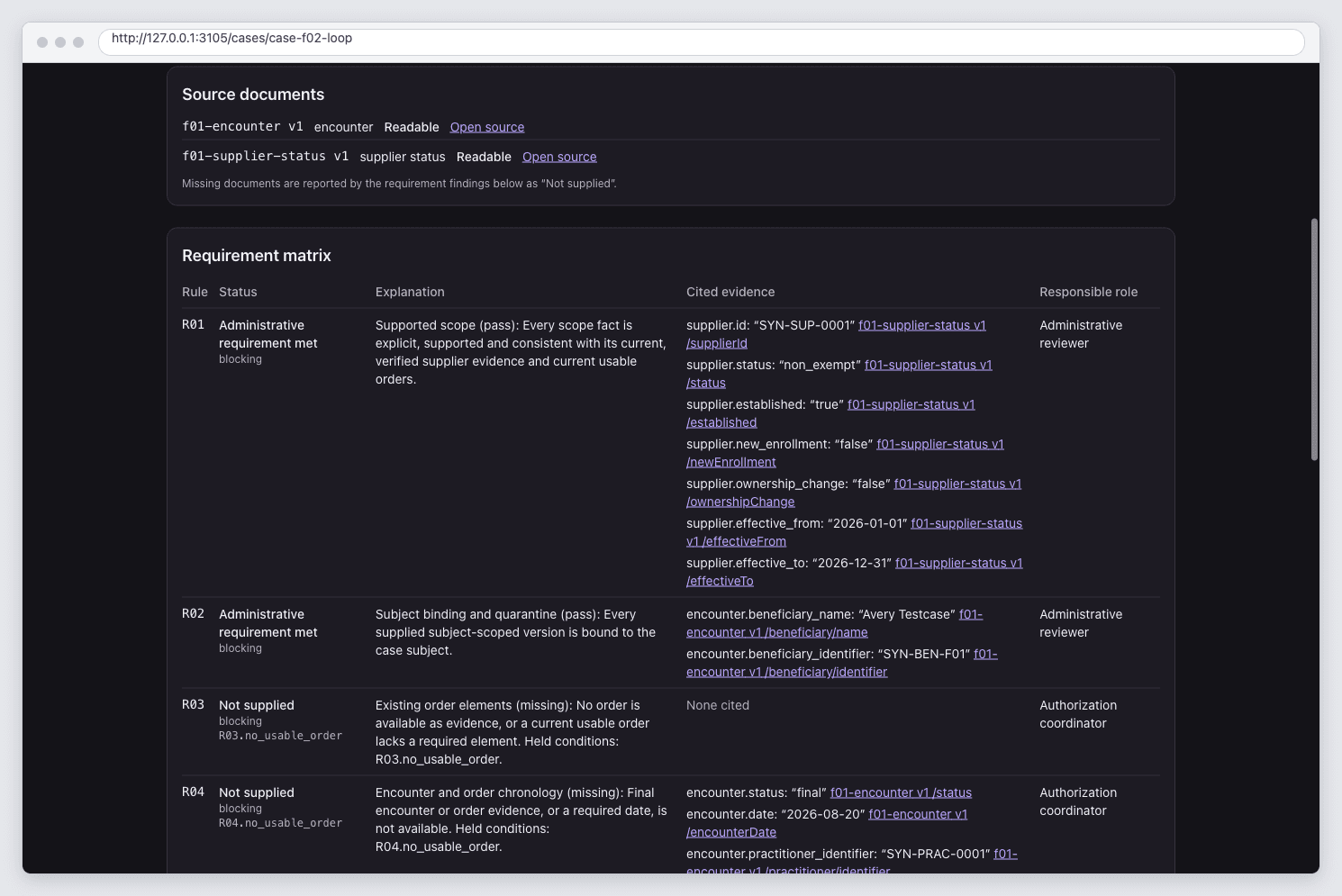
Revision 1, with the order absent. Packaged rules mode, agent graph off; captured 24 October 2026.
Approvals bind to the current case, source and policy revisions. Identical command replays return their recorded result, while stale decisions are refused. Next.js, Fastify and a worker share one application container; PostgreSQL preserves evidence, jobs and review history.
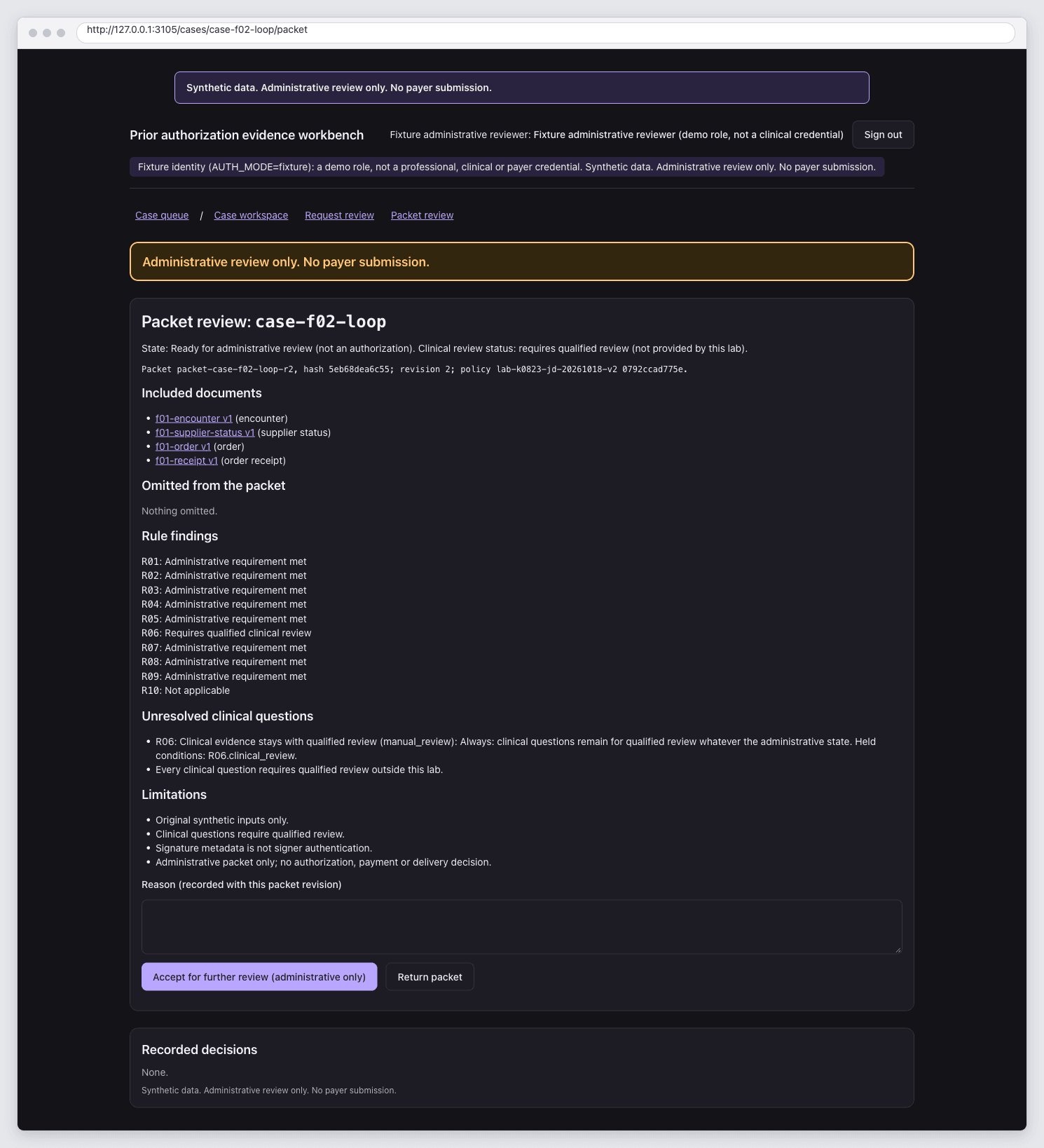
Revision 2 after the synthetic reply. The fixture reviewer has not accepted it; no payer submission occurs.
Agent role and observed results
An optional LangGraph investigation reads scoped documents and proposes cited facts or requests. The API validates source references, and valid proposals still require human review. Rules determine administrative state.
The recorded live evaluation used Claude Opus 5.5 on 22 synthetic cases: 223/223 accepted facts matched deterministic extraction, and 4/6 request proposals passed validation. It cost about USD 1.84. Equal issue scores were inherited from rules, so no incremental agent benefit or time saving is established. This was a separate evaluator run, not a packaged live-interface test.
The implementation uses structured synthetic JSON and simulated exchanges. It has no real EHR/payer connection or arbitrary PDF extraction. Run the public repository or read the design and evaluation.
Editorial archive date: 22 October 2026. Reviewed 24 October against public snapshot 1cbc5c9; the live results were recorded on 21 October.