supplier-disruption.md · Applied AI
Supplier disruption
A buyer's workbench for understanding a late delivery, reviewing a recovery option and verifying the records changed by an approved plan.
- TypeScript
- Next.js
- Tailwind CSS
- Fastify
- LangGraph
- Claude
- PostgreSQL
- ERPNext
- Docker Compose
A supplier changes its delivery promise. The buyer needs to know which customer demand is exposed, whether another warehouse can cover it and who may approve the cost.
This workbench turns that investigation into a traceable case. Its synthetic example has 120 units of demand, seventy covered on time and a fifty-unit transfer option. The EUR 160 transfer exceeds the buyer's approval limit, so the decision belongs to a manager.
Archive date: 20 August 2026. Implementation and evidence reviewed on 24 October 2026.
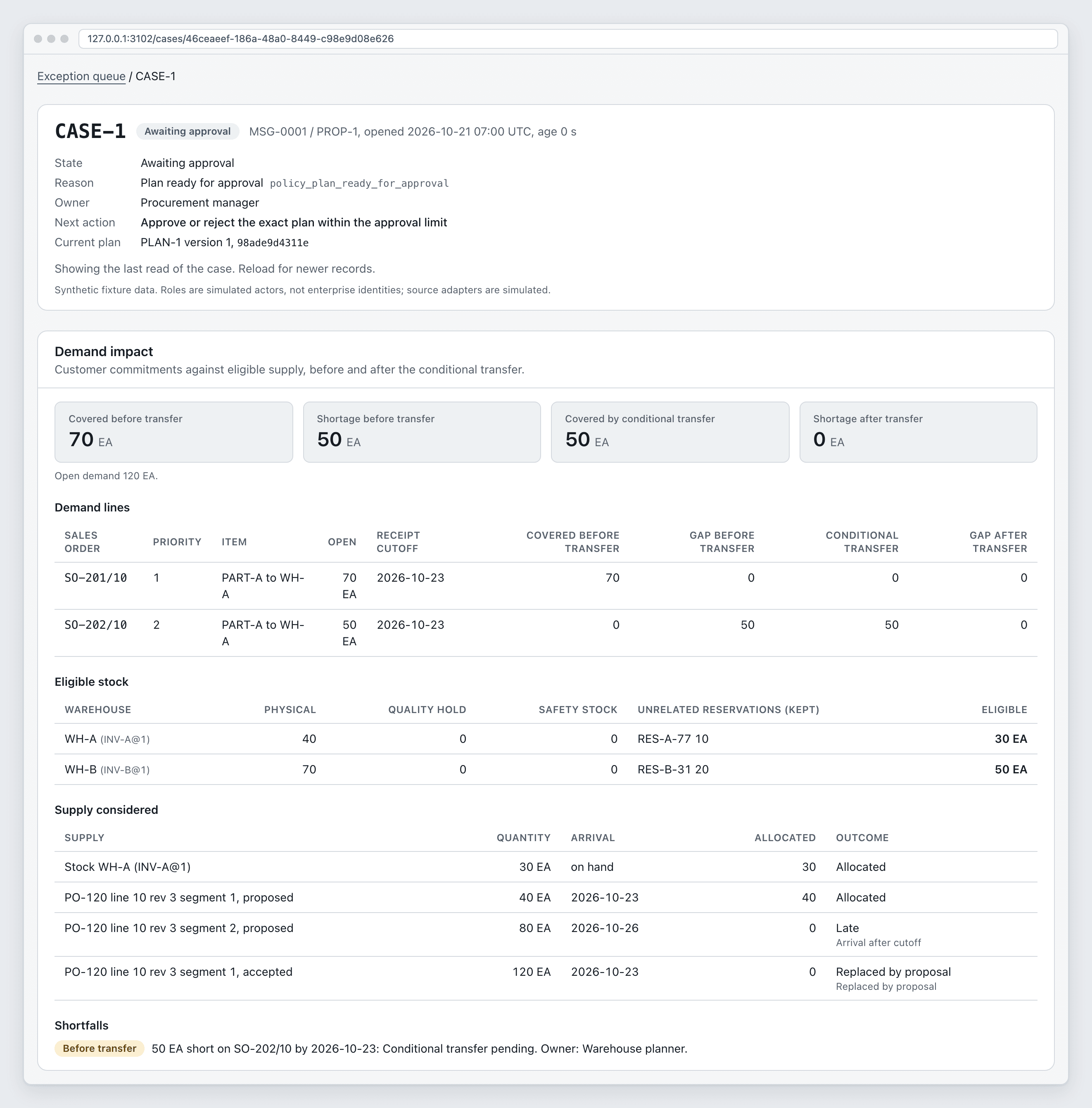
Synthetic case C-01 in the actual app. Structured input, simulated roles and fixture sources; no extraction or model call.
From changed terms to verified records
For email input, a bounded agent proposes delivery terms with supporting quotes or asks for clarification. The original message stays inspectable beside the proposed terms. Deterministic rules calculate coverage and transfer eligibility. The model cannot approve spending, send a message or change an ERP record.
A human approves the exact plan. The application checks current authority and source conditions before claiming each action, then journals the amendment, reservation and transfer request separately. When a response is lost, it looks up the recorded operation before retrying.
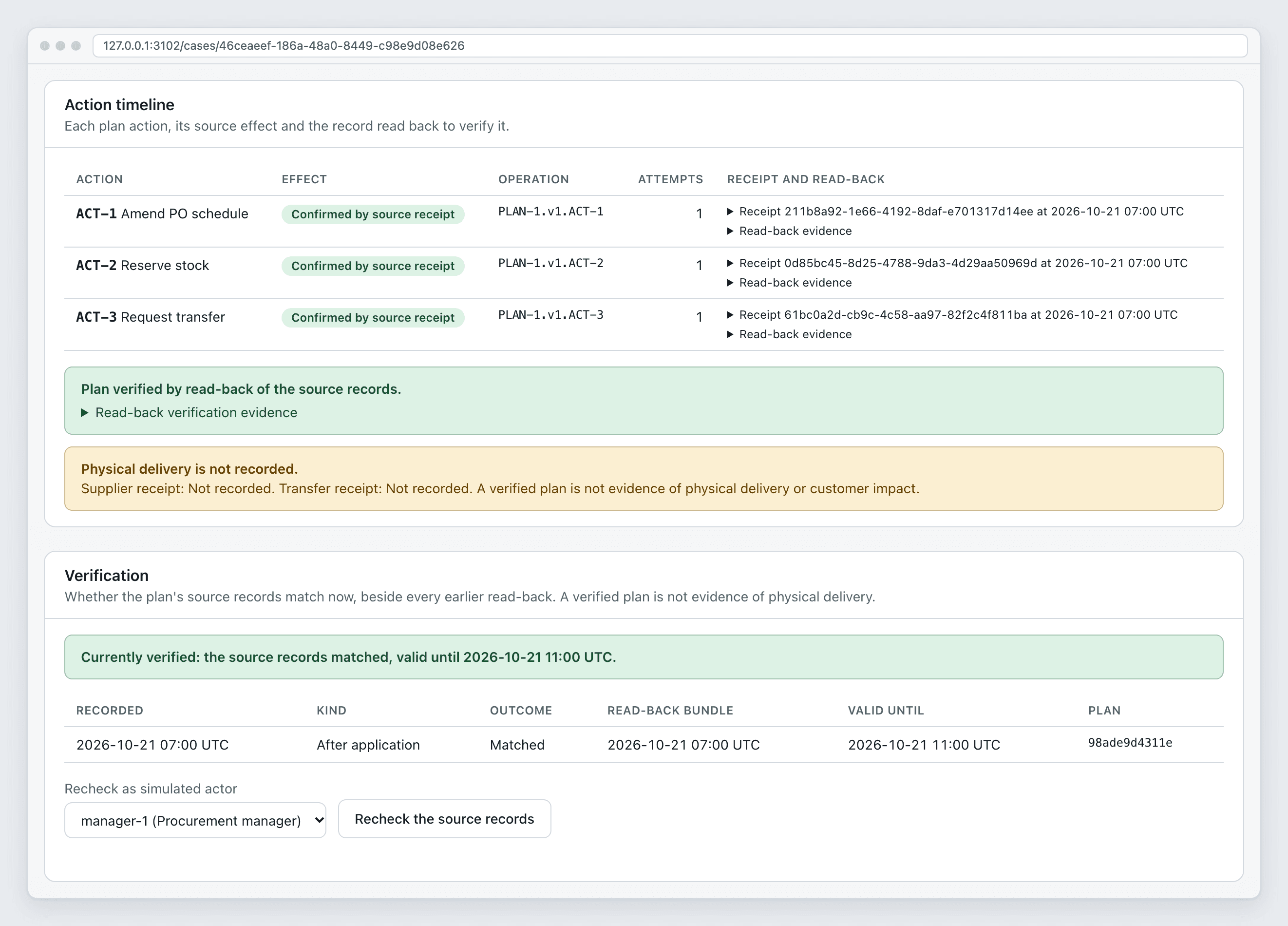
Synthetic recovery from a lost reservation response. Fixture adapters and no model call; verified records do not establish physical arrival.
Results and scope
The snapshot verification reports 630 unit, 508 integration and 66 packaged checks passing. A separate single live run on sixteen synthetic emails selected all expected proposal-or-pause outcomes; that measured extraction, not complete purchasing execution.
The main workflow uses simulated source systems. Its ERPNext connector is a separate sandbox proof with narrower operations. Real supplier authentication, physical receipt and customer benefit remain unverified.
Next.js, Fastify and a queue worker share one application container, with PostgreSQL separate. Start the no-key demo from the public repository, or read the workflow and evaluation article.